

Introduction
In the rapidly evolving landscape of manufacturing and electronics, the choice between AI-driven Bill of Materials (BOM) automation and traditional methods is crucial. As industries face increasing pressure to innovate and optimize, understanding the strengths and weaknesses of AI BOM versus traditional BOM automation becomes essential. This blog post delves into the key differences, benefits, and challenges of each approach, providing insights that can help manufacturers make informed decisions in their automation journey.
Understanding AI BOM vs Traditional BOM Automation
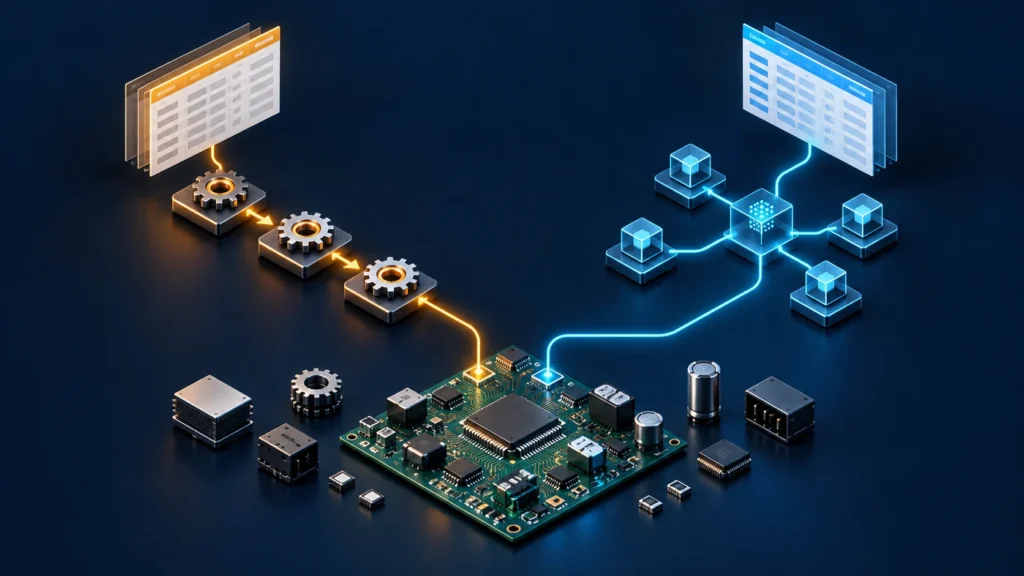
In today's rapidly evolving manufacturing landscape, understanding the differences between AI-driven Bill of Materials (BOM) automation and traditional BOM processes is crucial. As industries strive for efficiency and accuracy, the integration of AI technologies offers transformative benefits, enhancing decision-making and reducing errors. This section delves into the significance of BOM automation, highlighting how AI can streamline workflows, improve collaboration, and ultimately drive innovation in manufacturing and electronics. Embracing these advancements is essential for companies aiming to remain competitive and responsive to market demands.
Key Benefits for Manufacturers
BOM automation streamlines the production process, reducing errors and saving time. By integrating automated systems, manufacturers can ensure accurate component tracking and inventory management, leading to fewer delays. For instance, real-time updates on stock levels can prevent production halts due to shortages. Additionally, automated BOMs facilitate better collaboration across teams, enhancing communication between engineering and procurement. This synergy not only accelerates product development cycles but also improves overall quality, allowing manufacturers to respond swiftly to market demands and maintain a competitive edge.
Common Implementation Challenges
Implementing BOM automation in electronics manufacturing often presents several challenges. Data accuracy is crucial; discrepancies can lead to costly errors. To mitigate this, establish a robust data validation process before automation. Integration with existing systems can also be complex; consider phased rollouts to minimize disruption. Training staff on new tools is essential; invest in comprehensive training programs to ensure smooth adoption. Lastly, maintaining flexibility in the automation process allows for adjustments as production needs evolve, enhancing overall efficiency and effectiveness.
Best Practices for Integration
To ensure successful BOM automation in electronics manufacturing, prioritize data accuracy by regularly updating component information and specifications. Implement a centralized database to streamline access and reduce discrepancies. Foster collaboration between engineering and procurement teams to align on part selections and sourcing strategies. Utilize integration tools that support real-time updates and notifications, minimizing delays in production. Regularly train staff on new systems and processes to enhance efficiency and reduce errors. Lastly, conduct periodic audits to assess the effectiveness of the integration and make necessary adjustments.
Measuring Success and ROI
To effectively measure success and ROI in BOM automation, manufacturers should establish clear KPIs such as reduction in lead times, error rates, and labor costs. For instance, tracking the time saved in generating BOMs can highlight efficiency gains. Implementing software that integrates with existing systems allows for real-time data analysis, enabling quick adjustments. Additionally, conducting regular audits of BOM accuracy can reveal cost savings and improve production quality. By quantifying these metrics, manufacturers can demonstrate the tangible benefits of automation investments.
Future Trends to Watch
As BOM automation continues to evolve, several trends are emerging that manufacturing professionals should monitor. Artificial intelligence and machine learning will enhance data accuracy and predictive analytics, streamlining inventory management. Additionally, the integration of IoT devices will facilitate real-time tracking of components, improving supply chain transparency. Embracing cloud-based solutions can also foster collaboration among teams, allowing for quicker updates and revisions. Staying informed about these advancements will enable manufacturers to optimize processes and maintain a competitive edge in the industry.
Conclusion
AI BOM automation offers enhanced accuracy, efficiency, and adaptability compared to traditional methods. By leveraging machine learning and data analytics, organizations can streamline their processes, reduce errors, and improve decision-making. While traditional BOM automation remains valuable for certain applications, the shift towards AI-driven solutions is becoming increasingly essential in a rapidly evolving market. Ultimately, the choice between AI and traditional BOM automation depends on specific business needs, but embracing AI can lead to significant long-term benefits.
AI-driven Bill of Materials (BOM) automation significantly enhances efficiency and accuracy in electronics manufacturing compared to traditional methods. By leveraging advanced algorithms, AI can quickly analyze vast datasets, reduce human error, and streamline updates in real-time. This results in faster production cycles, improved resource management, and cost savings, empowering professionals to focus on innovation and strategic decision-making.
Explore the critical differences between AI BOM and traditional BOM automation in our latest blog post. Discover which solution can enhance efficiency and accuracy in your manufacturing processes. Don't miss the opportunity to optimize your operations. Contact us today to learn more about our solutions.
